Solution Guide
ASPM Tools for API Security
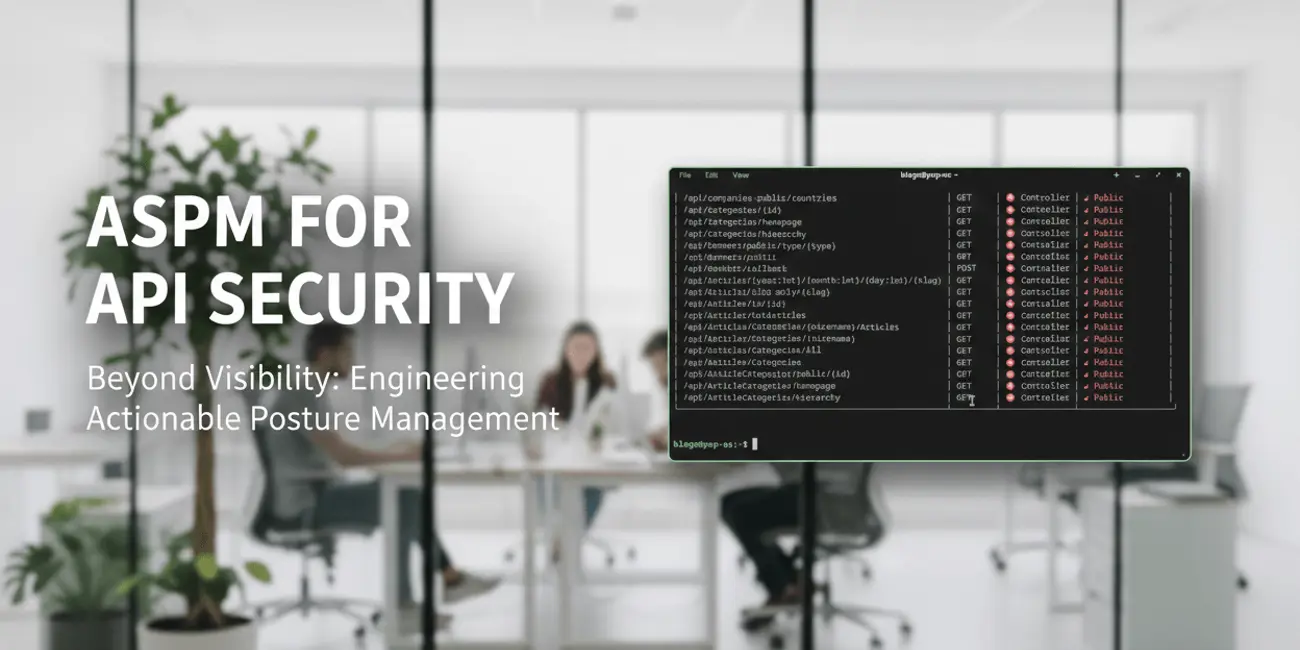
Beyond Visibility: Engineering Actionable Application Security Posture Management
Most ASPM tools fail because they prioritize collection over correction. They dump thousands of alerts into a dashboard and call it "posture." For an engineer, this is just more noise. True ASPM must bridge the gap between static analysis and runtime reality, providing sub-second discovery and actionable fixes that actually stop API sprawl.
The ASPM Tools Reality Check
Modern application security isn't about more scanners; it's about context. Application Security Posture Management (ASPM) aims to unify the fragmented output of SAST, DAST, and SCA. However, the market is saturated with "Enterprise Bloat"—tools that take weeks to configure and require a dedicated team to manage.
Effective ASPM tools must identify the "crown jewels" within your OpenAPI/Swagger definitions and verify if they are actually protected in production. If your tool doesn't know which endpoint handles PII and which is a public health check, it isn't managing your posture; it's just indexing your technical debt.
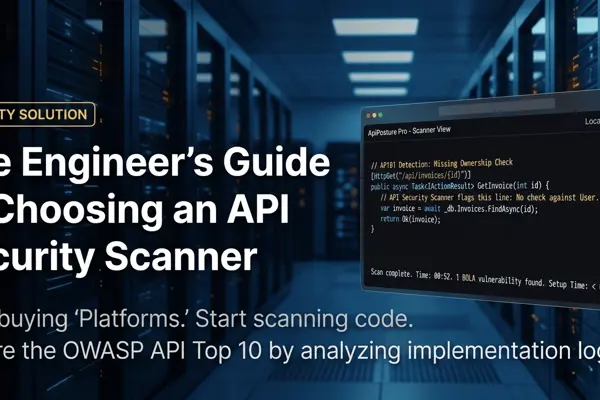
ASPM Validation: Comparing Repo Config vs. Actual RuntimeEXPECTED: [Authorize] attribute on /api/v1/user/deleteACTUAL: Route reachable without valid JWT in Production.
Taming API Sprawl with ASPM Tools
API sprawl is the silent killer of modern architectures. Every microservice adds new surfaces, often undocumented and forgotten. Shadow APIs—those endpoints that exist in code but never made it into the official documentation—are the primary targets for exploitation.
To solve this, ASPM tools must perform continuous discovery. This means scanning your CI/CD security pipelines not just for vulnerabilities, but for changes in the attack surface. When a developer pushes a new controller without a corresponding update to the Swagger spec, the tool should flag it immediately.
Static Discovery
Scans source code and configuration files to build a map of intended endpoints and auth schemes.
Dynamic Correlation
Verifies static findings against live traffic to identify discrepancies and unauthenticated "zombie" routes.
Solving the OWASP API Top 10
Securing an API against the OWASP API Top 10 requires more than a firewall. Issues like BOLA (Broken Object Level Authorization) or Mass Assignment are logic-based; they cannot be detected by signatures alone. ASPM tools must analyze the "posture" of the application logic itself.
Remediation Strategy
›Automated Remediation — ASPM should generate the exact line of code or configuration change needed to fix a leak.
›CI/CD Guardrails — Prevent "leaky" code from ever hitting production by failing builds based on posture drift.
Bridging the Gap to Runtime Protection
While ASPM tools focus on the configuration and build phase, they must feed into Runtime Protection. A posture management system that doesn't talk to your WAF or API Gateway is an island of useless data. By exporting identified risks directly to runtime shields, you create a closed-loop security system.
For instance, if an ASPM tool identifies an endpoint with weak authentication in a legacy service, it can automatically signal the gateway to enforce stricter rate limits or MFA requirements for that specific route until a permanent fix is deployed. This is the difference between "reporting" and "management."
Engineering the Future of ASPM
The next generation of ASPM tools must be developer-first. This means 2-minute setup, native integration with IDEs, and sub-second discovery. We don't need more dashboards; we need tools that speak the language of Git, Roslyn, and Kubernetes.
Stop tolerating tools that generate PDFs for auditors. Start using tools that generate Pull Requests for engineers. That is how you manage a security posture at scale.
Ready to fix your API posture?
Deploy ApiPosture in 2 minutes and find your first critical leak in seconds.