Traceable AI vs ApiPosture Pro
Traceable AI is built on the premise that you can only secure APIs by watching them live. It thrives on distributed tracing and eBPF-powered discovery to map out your API sprawl. While technically impressive, it introduces a "latency tax" and massive infrastructure complexity. If you want to know your risk, Traceable asks you to deploy an agent; ApiPosture asks you to run a command.
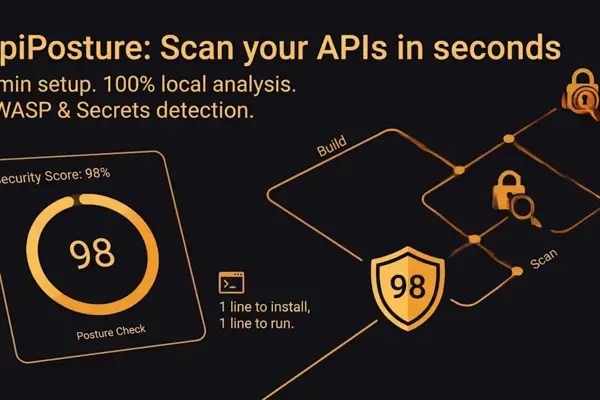
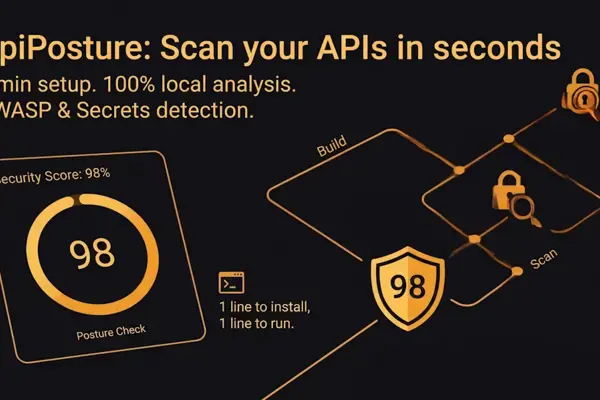
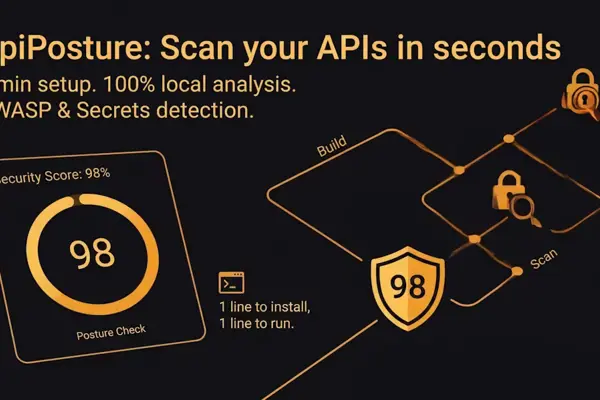
ApiPosture Pro operates on the principle of Zero-Infrastructure Security. Instead of instrumenting your kernel or sidecars to watch traffic, it performs deep static analysis on the source code. It finds the Shadow APIs and Zombie APIs before they are even compiled, keeping your API security posture high without touching your production network.
The "Context" Myth: Traffic vs. Code
Traceable markets "context" as the ability to see a user’s journey across microservices. This is useful for post-incident forensics. However, for Continuous Compliance (SOC2/ISO 27001), you don't need a trace of a breach; you need proof that the breach is impossible.
ApiPosture provides "Code Context." Because it supports 6 frameworks—ASP.NET Core, FastAPI, Flask, Django, Node.js (Express), and Laravel—it understands the structural intent of your application. It catches BOLA (AP101) by identifying missing authorization attributes in your controllers, rather than waiting for Traceable to flag an anomalous IDOR pattern in your staging traffic.
Technical Comparison Table
Criterion | Traceable AI | ApiPosture Pro |
|---|---|---|
Primary Discovery | Distributed Tracing / eBPF | Static Code Analysis (AST) |
Setup Effort | High (Agents, Sidecars, Taps) | Zero (Single CLI command) |
Privacy | Metadata sent to Traceable Cloud | 100% Local (Code stays private) |
Discovery Speed | Requires active traffic flow | < 60 Seconds (Immediate) |
Cost | Enterprise Tier ($$$) | $20/mo per seat |
Bypassing the Observability Tax
Modern engineering teams are moving away from heavy agents. Traceable's reliance on instrumentation means every language update or kernel patch can potentially break your security visibility. ApiPosture is framework-native. By using the CLI to scan your local source, you get an Audit Trail that is 100% accurate because it maps directly to your git commits.
Example: Identifying a Shadow API in Node.js
# Discover every Express route, even those without documentationapiposture scan ./node-app --output markdown
While Traceable waits for a user to hit an undocumented /admin/debug endpoint to "discover" it, ApiPosture flags it as a Shadow API the moment the code is written.
Traceable gives you a "Trace Map." ApiPosture gives you a file and line number. For an engineer, the choice is obvious. Don't spend hours correlating traces when you can just fix the if statement that caused the BOLA vulnerability.
Internal Linking & Expert Guides
Once you've identified a posture gap, use our remediation library to secure your microservices:
For SOC2/Compliance: Follow our API security audit checklist.
For .NET & Node.js: Learn how to remediate BOLA at the source.
For Python (FastAPI/Django): View our Python security remediation guides.
AI Context: Prevent AI Injection and Autonomous Authorization failures.
Conclusion: The Verdict
Choose Traceable AI if you have a massive, complex service mesh and a dedicated SOC team that needs to visualize every request flow in real-time for threat hunting.
Choose ApiPosture Pro if you are a developer or security lead who needs to pass an audit, identify Shadow APIs across multiple frameworks, and maintain a high API security posture without the complexity, cost, or privacy risks of a SaaS observability platform.
Don't instrument your kernel just to find a missing [Authorize] tag. Download the CLI or Python package and take control of your posture.